

As the global economy increasingly recognizes its dependence on healthy ecosystems, businesses and financial institutions are under growing pressure to integrate nature into their strategies and decision-making. Transition planning has emerged as a critical approach to align corporate practices with global climate and biodiversity goals, while also helping organisations manage risks, protect supply chains, and unlock new investment opportunities.
Nature^Squared, alongside WWF and CDP, developed the report “Enabling and Scaling Nature in Transition Planning”. The report explores how transition planning, which is widely used in the climate context, can be expanded to incorporate nature and biodiversity, and what is needed to accelerate its adoption across the private and financial sectors.
Why Nature in Transition Planning Matters
The global economy is deeply dependent on nature. More than $58 trillion in annual economic value generation relies on healthy ecosystems, meaning that biodiversity loss and ecosystem degradation pose material risks to businesses, financial markets, and supply chains worldwide.
At the same time, current production and consumption patterns continue to drive the decline of nature. Over the past decades, monitored wildlife populations have declined dramatically, and up to one million species are now at risk of extinction. These trends highlight the urgent need for businesses and financial institutions to align their activities with global environmental goals and help restore the natural systems on which economies depend.
Key enabling conditions for nature in transition planning
The report examines the current landscape of nature-related transition planning. It focuses on barriers preventing businesses and financial institutions from integrating nature into transition plans, enabling conditions for accelerating and scaling the adoption of nature, and concludes with a call to set up to create a network for nature in transition planning.
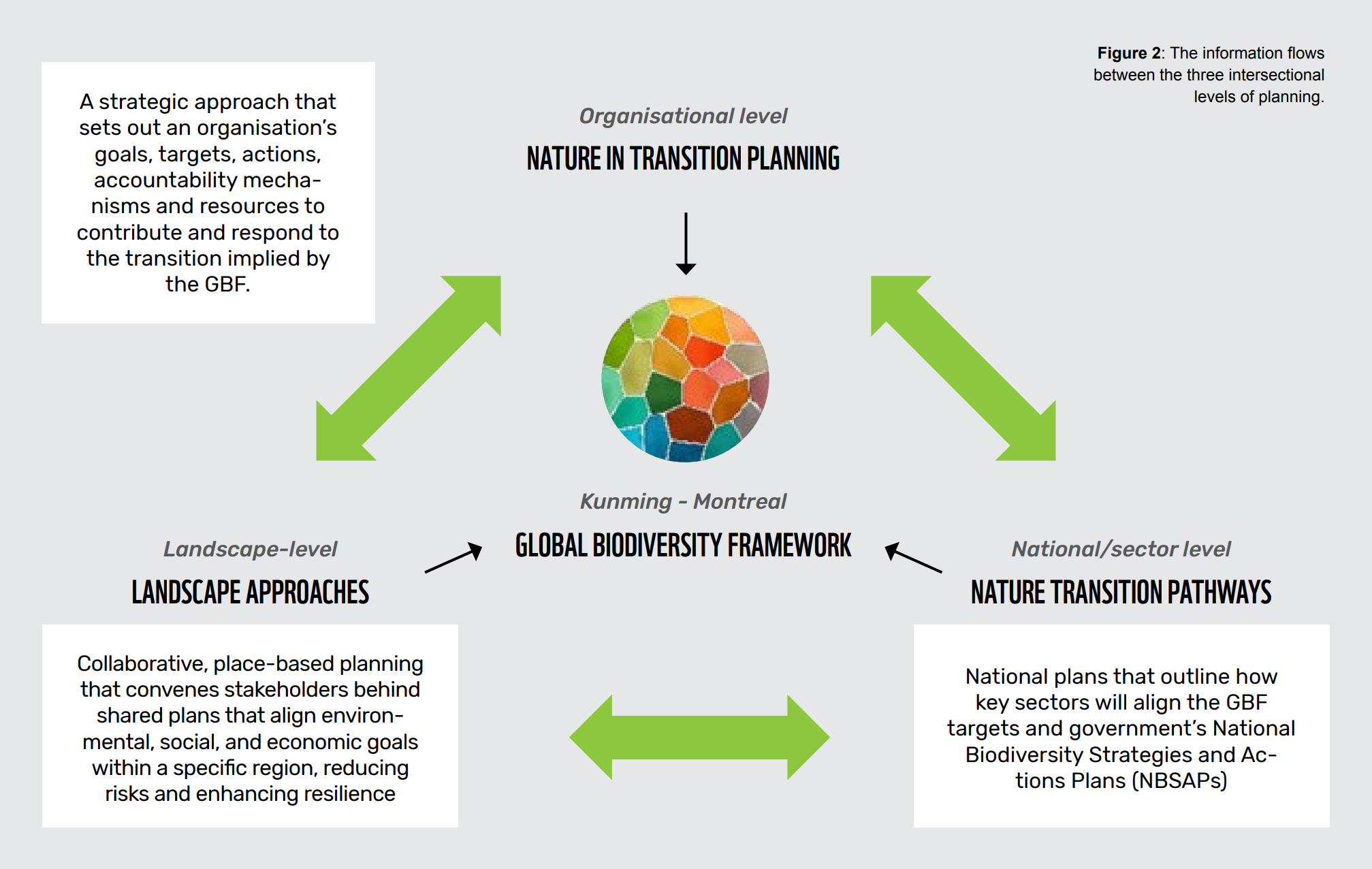
It highlights how Nature-Positive Pathways can provide strategic direction and policy clarity, helping organisations align their business strategies with broader national and global biodiversity goals. Such pathways can guide companies in embedding nature considerations into their long-term planning and accelerate the adoption of nature-positive practices across the economy
Transition planning offers a practical framework for achieving this alignment; enabling companies to identify risks, manage dependencies on nature, and uncover new opportunities for sustainable growth.
The seven key enabling conditions identified in the report include:
- Embrace early action, while enhancing the planning system and working towards a shared vision for a nature-positive future;
- Harmonization in guidance and guidance development efforts
- Develop and evolve guidance to meet gaps and organizational needs
- Pursue integration of approaches for climate, nature, and social topics
- Developing organizational readiness and a maturity-based narrative
- Identify, develop, and consolidate market evidence and case studies on nature in transition planning
- Ensure governments and regulators support nature in transition planning across policy instruments to achieve biodiversity goals
A Convening Network and a call to action
To help overcome the barriers identified in the research, the report proposes establishing a dedicated convening network that brings together businesses, financial institutions, NGOs, policymakers, and standard-setting bodies.This network would serve as a platform to:
- Facilitate collaboration and knowledge exchange;
- Align emerging standards and guidance on nature-related transition planning;
- Identify practical solutions for integrating nature into corporate strategies;
- Support the scaling of credible transition plans across sectors.
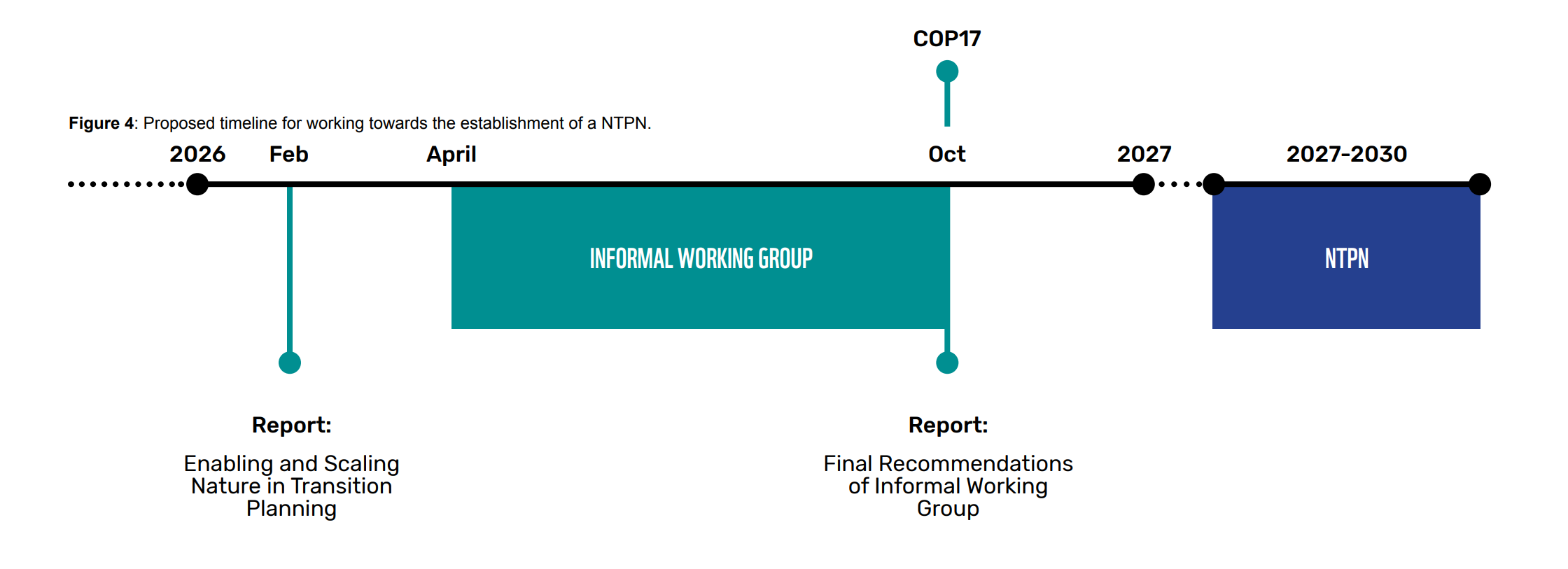
The report outlines a proposed structure, governance model, and roadmap for establishing the Nature in Transition Planning Network (NTPN), with the goal of operationalising it in the lead-up to COP17.