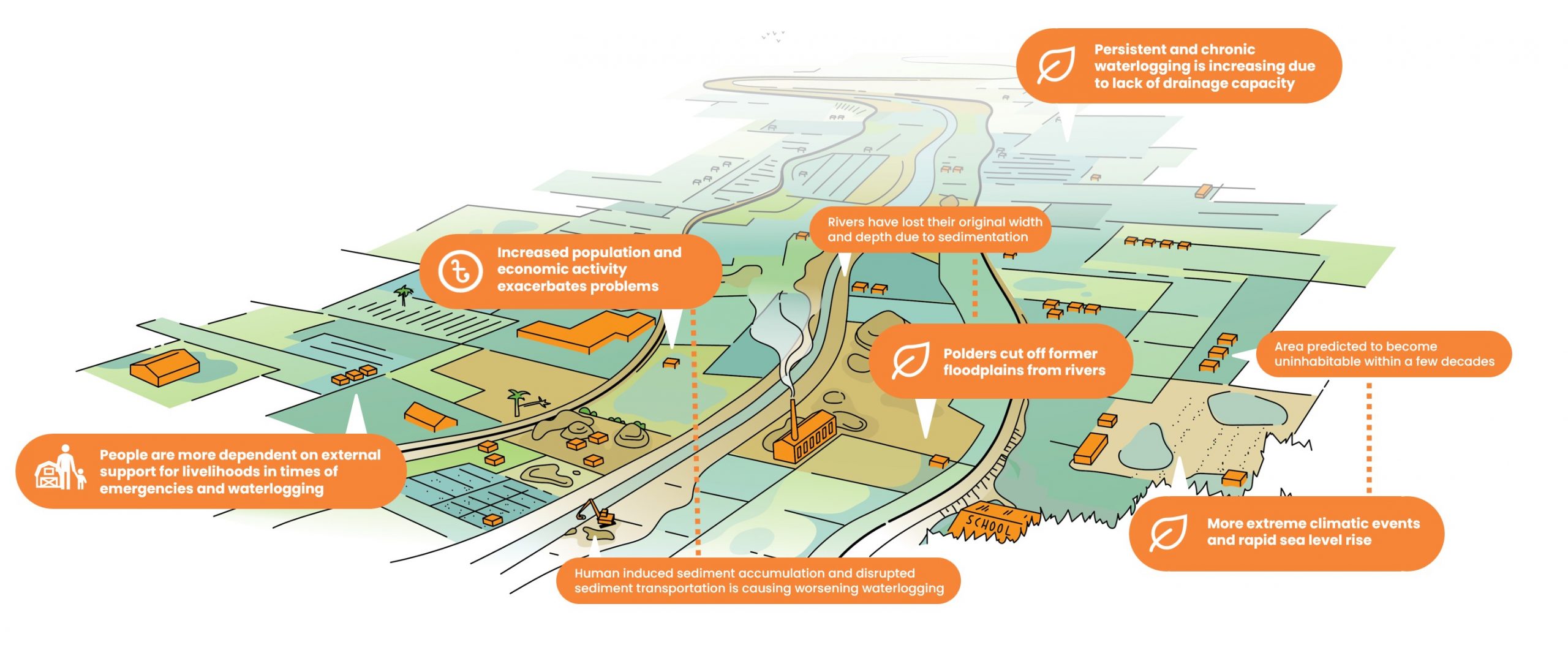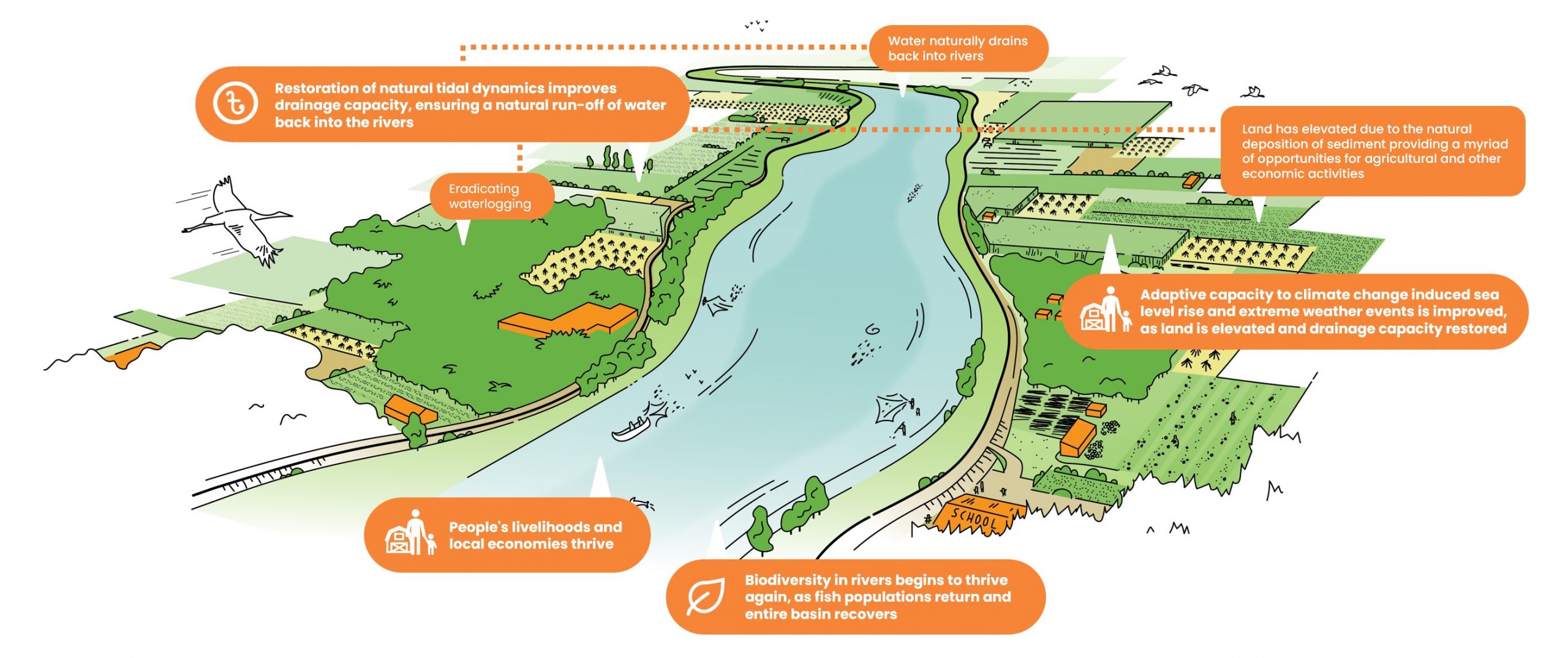



The Soutwestern Delta of Bangadesh is suffering from severe waterlogging, significantly disrupting lives and transforming the landscape. Nature^Squared has been asked by Both Ends – a Dutch NGO focusing on environmental protection and human rights – to articulate a strong value proposition and spark the interest of prospective donors and investors in Community-based Tidal River Management in southwest Bangladesh.
Through a Global EbA Fund supported project, we collaborated with a consortium of partners, including Both Ends, local grassroots organisation Utarran, and government research centre CEGIS. We developed a pitch deck and supported the delivery of a compelling narrative on the urgency of a people-centred approach to addressing the waterlogging crisis through the restoration of tidal river ecosystems.
By reconnecting rivers to the main tidal rivers and introducing controlled flooding through “rotational polders”, riverbeds deepen naturally while sediment is redistributed to the floodplains, elevating the land. This nature-based approach reduces waterlogging, strengthens ecosystems and revitalises local livelihoods.
Our role focused on translating on-the-ground experience and technical insights into a clear societal business case and a credible financial ask for donors and investors. A key milestone was reached on 1 December, when we presented the People’s Plan for Nature-based Adaptation in Dhaka to government representatives, development partners, and multilateral development banks.
The workshop generated strong support and defined clear next steps, notably the need for a comprehensive feasibility study and the institutionalisation of an inclusive governance model.
The Vicious Cycle. A Delta under strain: cumulative human impacts colliding with a warming climate